

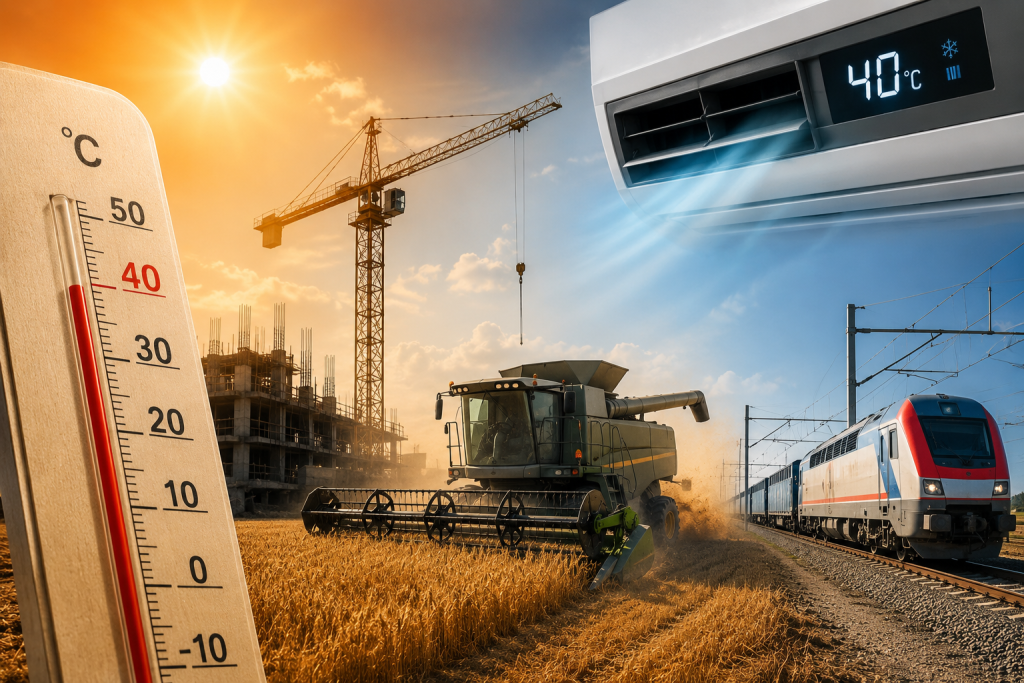
Every summer seems to bring new temperature records. While extreme heat causes discomfort and fatigue for people, it also creates critical operating conditions for machines, engines, and industrial equipment.
High temperatures, increased dust levels, long operating cycles and continuous operation at consistently elevated temperatures place significant stress on the entire system, including air, oil, fuel and hydraulic filtration components.
Under these conditions, proper maintenance and the right filtration system can make the difference between reliable operation and unexpected downtime.
Why does heat affect filtration performance?
High temperatures do not directly damage a filter, but they significantly change the operating conditions of the entire system.
During the summer months, it is common to experience:
- higher concentrations of airborne dust and particulate matter;
- increased operating temperatures for engines and equipment;
- longer and more demanding duty cycles;
- greater stress on lubricants, fuels, and hydraulic fluids.
In these conditions, the filtration system must retain a larger amount of contaminants while maintaining the required flow rate, filtration efficiency, and pressure drop within the system’s design specifications.
Maintenance checks you shouldn’t overlook
Summer is an ideal time to inspect the condition of your primary filtration systems.
Air Filters
Dry weather increases the amount of airborne dust, particularly in agriculture, construction, mining, quarrying, and earthmoving applications.
A clogged air filter restricts airflow to the engine, potentially affecting fuel consumption, performance, and component life.
Recommended practices include:
- regularly checking the restriction indicator, when installed;
- inspecting the condition of the filter element;
- replacing the filter according to the manufacturer’s maintenance schedule, avoiding improvised cleaning methods—such as compressed air—unless specifically recommended.
Oil Filters
Lubricating oil operates at higher temperatures during summer and tends to oxidize more quickly.
Contaminants accelerate oil degradation, increasing wear on pumps, bearings, and other mechanical components.
Following the recommended service intervals and using high-quality filter elements are essential to maintaining proper lubrication and equipment reliability.
Fuel Filters
Modern fuel injection systems operate with extremely tight tolerances.
Water and particulate contamination can seriously affect the fuel system, particularly during long periods of continuous operation.
Regular inspection and timely replacement of fuel filters help preserve engine efficiency and reduce the risk of costly failures.
Hydraulic Filters
In hydraulic systems, elevated temperatures increase component stress and make contamination control even more critical.
Effective hydraulic filtration protects pumps, valves, and actuators while maintaining precision, reliability, and continuous system performance.
Preventive maintenance: an investment, not a cost
Many equipment failures are not caused by sudden events but by the gradual accumulation of contaminants and the use of filters beyond their intended service life.
Scheduling regular inspections, monitoring filter restriction indicators, and replacing filter elements with quality components helps:
- reduce the risk of unexpected downtime;
- maintain peak system performance;
- minimize component wear;
- lower maintenance and repair costs;
- extend the service life of engines and equipment.
The right filtration solution for every application
Every machine operates under different conditions.
A combine harvester during harvest season, an excavator working in a quarry, or a generator set installed in a dusty environment all face very different operating challenges.
For this reason, there is no universal filtration solution. Selecting the right filtration system means considering the specific application, operating environment, the fluids being filtered, and the expected contamination levels.
High temperatures are just one of the many factors that put industrial equipment to the test. Properly engineered filtration, combined with a preventive maintenance program, remains the most effective strategy for ensuring reliability, operational continuity, and long-term component protection throughout the year.